Source Automatic Powdered Sugar Grinder for Candy, Chocolate, and Ice Cream
Find and compare 30 automatic powdered sugar grinder options from Jiangsu, China. These machines feature SUS304 construction, 250kg/H capacity, and 100-mesh fineness for candy, chocolate, and ice cream production; compare the available evidence and request quotations based on your requirements.
Key considerations
Products List




Comprehensive Sourcing Guide
Automatic Powdered Sugar Grinder Sourcing Guide
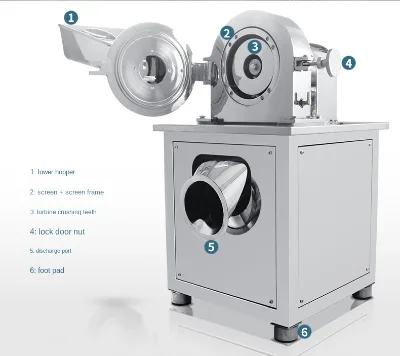
Procuring an automatic powdered sugar grinder requires careful evaluation of the machine's ability to handle specific confectionery inputs like candy, chocolate, and biscuit dough. The observed product listings indicate that these units are designed for semi-automatic to fully automatic operation, with a primary focus on mild and thermal processing stages. Buyers must verify that the specific model selected aligns with their production line's throughput needs, as observed capacities range from 250 kg per batch to 250 kg per hour.
The physical footprint and power requirements are critical constraints for facility planning, with observed dimensions varying between 1240x960x1733 mm and 1250x1000x1750 mm. Electrical specifications typically center around 7.5 kW spindle motors and 1.5 kW feeder motors, though voltage settings are often customized to match local grid standards. Sourcing teams should prioritize units constructed from SUS304 stainless steel to ensure hygiene compliance, while confirming that the packing method, whether wooden box or standard export case, protects the machinery during transit from Jiangsu or Suzhou.
Product Scope and Observed Listing Signals
The market for automatic powdered sugar grinders presents a diverse range of models, including the FTJ250 and DR-FTJ series, which cater to different fineness requirements ranging from 100 mesh to 150 mesh. Buyers should note that while some listings specify a spindle speed of 3800 r/min, others may offer variable speeds to accommodate different sugar crystal sizes. The application scope is broad, covering chocolate factories and general food and beverage facilities, but the specific suitability for ice cream or donut production depends on the exact grinding mechanism and heat management capabilities of the unit.
Listing signals often highlight the availability of customization for power sources and voltage, which is essential for international procurement where electrical standards differ significantly. However, the term "customized" appears alongside "non-customized" in various attributes, requiring buyers to explicitly confirm whether the machine arrives as a standard unit or with specific modifications. The observed price range of 1000 to 89,999 USD suggests a wide disparity in build quality and automation levels, necessitating a detailed review of the included motor power and overall machine weight, which is typically around 500 kg.
Technical Specifications to Verify
When evaluating technical specifications, the average fineness of 100 mesh is a common benchmark, yet some units claim a fitness degree of 100 meshes or a specific fineness of 100 microns. Buyers must verify the actual output consistency, as the observed data also mentions a 150 mesh capability, which may require different screen configurations or motor adjustments. The distinction between mild and thermal processing is vital, as thermal processing can alter the sugar's texture and flow properties, potentially affecting the final product quality in confectionery applications.
Motor performance is another critical verification point, with observed spindle motor powers of 7.5 kW and feeder motor powers of 1.5 kW being standard for high-capacity units. The feeding motor speed of 217 r/min is a specific parameter that influences the uniformity of the feed rate, directly impacting the grinding efficiency. Procurement teams should request detailed performance curves to ensure the machine can maintain the required 250 kg/h capacity without overheating, especially when processing materials that generate significant frictional heat during the grinding process.
Compliance and Safety Documentation
Compliance documentation is a primary concern for industrial buyers, with ISOCE certification appearing as a key attribute in the observed product listings. While this certification suggests adherence to certain international standards, buyers must request the specific certificate documents to verify the scope and validity of the compliance status. The presence of CE standards in the product data further indicates that the machinery may meet European safety directives, but this should be confirmed through official documentation rather than assumed from the listing title.
Safety features must be validated against the specific operational environment of the food and beverage factory. The use of SUS304 material is a standard requirement for food contact surfaces, ensuring resistance to corrosion and ease of cleaning, but buyers should verify the thickness and grade of the steel used in critical components. Additionally, the electrical safety of the customized voltage systems must be reviewed to ensure they meet local regulatory requirements, preventing potential hazards in the production facility.
Cost Drivers and Commercial Terms
The cost of an automatic powdered sugar grinder is driven by several factors, including the motor power, the level of automation, and the specific customization options requested. The observed price range of 1000 to 89,999 USD reflects the variance between basic models and high-end units with advanced thermal processing capabilities. Buyers should analyze the total cost of ownership, considering that higher power motors and specialized grinding mechanisms may increase energy consumption and maintenance costs over the machine's lifecycle.
Commercial terms such as the minimum order quantity (MOQ) and lead times are critical for supply chain planning, with observed MOQs ranging from 1 to 2 units. The packaging method, whether a wooden box or a standard wooden case, adds to the shipping cost and must be factored into the total landed cost. Buyers should negotiate clear terms regarding the delivery location, as the origin is listed as Jiangsu or Suzhou, China, and ensure that the shipping terms cover all risks associated with transporting heavy machinery like the 500 kg units observed in the market.
Supplier Qualification and Quality Control
Supplier qualification involves verifying the manufacturer's location and production capabilities, with observed origins in Jiangsu and Suzhou, China, indicating a concentration of industrial machinery in these regions. Buyers should conduct due diligence on the supplier's track record in producing food-grade equipment, specifically checking their experience with sugar grinding and confectionery applications. The presence of a "Sugar Mill" or "Sugar Grinder" in the product name suggests specialization, but independent verification of their manufacturing facility and quality control processes is essential.
Quality control measures must be established before production begins, focusing on the consistency of the grinding fineness and the durability of the stainless steel components. Buyers should request sample production runs to test the machine's ability to achieve the specified 100 mesh or 150 mesh output consistently. Additionally, the inspection of the overall size and weight specifications against the provided data ensures that the delivered unit matches the ordered configuration, preventing installation issues at the factory site.
Long-Term Procurement Checks
Long-term procurement checks require a focus on the availability of spare parts and the technical support provided by the supplier. Given the specific motor speeds and power ratings observed, such as the 3800 r/min spindle speed, buyers must ensure that replacement parts like screens and bearings are readily available to minimize downtime. The customization of voltage and power sources also implies that future maintenance may require specialized components, making a robust support agreement a critical part of the procurement strategy.
Sustainability and energy efficiency are increasingly important factors in long-term equipment selection, particularly for machines with 9 kW or 7.5 kW power ratings. Buyers should evaluate the energy consumption per kilogram of sugar processed to ensure the machine remains cost-effective over time. Regular performance audits should be scheduled to verify that the machine continues to meet the 250 kg/h capacity and maintains the required fineness levels, ensuring that the investment continues to deliver value in the competitive confectionery market.
FAQs
What is the typical capacity of an automatic powdered sugar grinder?
The typical capacity is 250 kg per hour or per batch. This output supports continuous production lines in food factories. Operators can adjust feeding speeds to maintain consistent throughput. The machine handles bulk sugar efficiently without clogging. This capacity suits medium to large-scale confectionery manufacturing needs.
What fineness can an automatic powdered sugar grinder achieve?
The grinder achieves an average fineness of 100 mesh or 100 microns. Some models reach up to 150 mesh for ultra-fine powder. This precision ensures smooth texture in candy and chocolate applications. The adjustable spindle speed helps control particle size distribution effectively.
Which materials are used in the construction of these grinders?
These grinders are constructed from SUS304 stainless steel. This material ensures hygiene and resistance to corrosion during processing. The durable build supports mild and thermal processing methods. The food-grade surface is easy to clean and maintain. This construction meets standard food safety requirements for industrial use.
Can the voltage and power source be customized for these machines?
Yes, the voltage and power source can be customized. The standard electric motor power is 7.5kw for the spindle. The feeder motor typically operates at 1.5kw. Custom voltage options accommodate different regional electrical standards. This flexibility ensures safe integration into various factory power grids.
What certifications do automatic powdered sugar grinders typically hold?
These machines typically hold ISOCE certification. This indicates compliance with international quality and safety standards. The CE mark ensures adherence to European machinery directives. These certifications provide assurance for global food and beverage factories. Buyers should verify specific documentation during the procurement process.
How is the machine packed for international shipping?
The machine is packed in a standard wooden box or case. This packaging protects the unit during long-distance transport. The standard export packing ensures safety against moisture and impact. The dimensions are approximately 1240 by 960 by 1733 mm. This secure method minimizes damage risks during global logistics handling.